
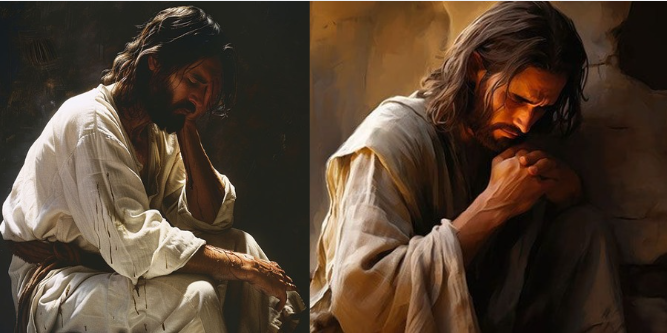

Introduction
“Jesus wept.”
Two simple words. That’s all it takes.
Tucked quietly inside the pages of the Bible, this brief line has stirred more reflection, sermons, and quiet moments of comfort than many longer passages. Found in Gospel of John 11:35, it holds the title of the shortest verse in most English translations of Scripture.
Short doesn’t mean small, though.
For centuries, readers have paused over this verse, sometimes surprised by it. Why would the Son of God cry? What does it reveal? And why has it remained so meaningful across generations?
To understand its weight, one has to step into the scene where it appears — a village filled with grief, a tomb sealed with stone, and a Savior who chose not to hide His tears.
What Does “Jesus Wept” Mean?
At its most basic level, the verse tells readers that Jesus Christ cried. That’s the literal meaning. He stood near the tomb of a friend and wept.
Yet those tears carry layers of meaning.
The Literal Moment of Weeping
In John 11, Jesus arrives in Bethany after learning that His close friend, Lazarus, has died. Lazarus had been in the tomb for four days by the time Jesus reaches the village. Grief hangs heavy in the air. Family members and neighbors are mourning. His sisters are heartbroken.
Jesus knows what is about to happen. He knows He will raise Lazarus from the dead. And still — He weeps.
That detail matters.
He doesn’t rush past the sorrow. He doesn’t dismiss it. He doesn’t offer a cold explanation. He enters into it.
Emotional and Spiritual Significance
The tears show something deeply human. They reveal empathy. They show that divine power doesn’t cancel out emotional depth.
There’s comfort in that idea. Many people struggle with the thought of a distant God — powerful but detached. This verse quietly challenges that assumption. It paints a picture of a Savior who feels.
Some theologians suggest Jesus wept because He saw the pain death brings into the world. Others believe He wept in response to the grief of Mary and Martha. Still others see frustration at unbelief in the crowd. The truth may hold elements of all three.
Grief, compassion, and the weight of mortality were all present in that moment.
The tears were real.
Cultural and Historical Context of Mourning
To understand the scene fully, it helps to consider mourning customs in first-century Jewish culture. Funerals were public and expressive. Professional mourners were sometimes hired. Loud weeping and visible sorrow were common.
In that setting, tears were not signs of weakness. They were signs of love and honor.
When Jesus wept, He wasn’t breaking cultural norms. But He was doing something more personal. His tears were not performative. They were deeply relational.
He wept for a friend.
Where Is “Jesus Wept” Found in the Bible?
The verse appears in John 11:35 within the Gospel of John. The Gospel itself is known for its vivid storytelling and rich theological themes. Chapter 11 is one of its most powerful narratives.
It tells the story of loss — and then, astonishingly, restoration.
The Story of Lazarus
Lazarus of Bethany was a close friend of Jesus. When he fell ill, his sisters sent word to Jesus, hoping He would come quickly. Instead, Jesus delayed His journey. By the time He arrived, Lazarus had already been buried.
This delay confused many readers at first glance. Why wait?
Within the larger story, the delay sets the stage for something extraordinary. Jesus eventually stands before the tomb and commands the stone to be removed. Despite objections about the smell and the finality of death, He calls Lazarus by name.
And Lazarus walks out.
It’s one of the most dramatic miracles recorded in the New Testament.
Yet the miracle doesn’t erase the tears that came before it. The weeping happened first. That sequence feels intentional.
The Role of Mary and Martha
Mary and Martha, Lazarus’s sisters, respond differently to their grief. Martha meets Jesus on the road and expresses both faith and disappointment. Mary later falls at His feet, weeping.
Their words carry a familiar ache: “Lord, if you had been here, my brother would not have died.”
Many readers recognize that feeling — the tension between belief and heartbreak.
Jesus engages with both sisters personally. He speaks hope to Martha. He shares tears with Mary. His responses are tailored, relational, attentive.
The verse “Jesus wept” appears after He sees Mary crying and the mourners grieving with her. The sight moves Him deeply.
The Setting in Bethany
Bethany was a small village near Jerusalem. It was close enough that many Jews from the city had come to comfort the family. The scene was not private.
This makes the tears even more striking. Jesus wept publicly. He did not protect His image. He did not present a stoic front.
In a culture that often prizes strength without vulnerability, that detail continues to resonate.
Why This Verse Still Matters Today
Despite its brevity, “Jesus wept” speaks into modern life in quiet but steady ways.
Grief remains universal. Loss hasn’t disappeared. People still stand beside hospital beds and gravesides, asking hard questions. The verse offers something gentle: the reminder that sorrow is not ignored by God.
It suggests that tears are not a failure of faith.
Some readers find reassurance in knowing that even the one who would conquer death first acknowledged its sting. There’s something grounding about that. It makes faith feel less abstract and more human.
The verse also challenges shallow spirituality — the kind that rushes people past their pain. Jesus did not hurry the mourners. He did not silence their sadness with platitudes. He stepped into it.
That model still feels relevant.
In churches, counseling rooms, and quiet moments of private prayer, this short verse often surfaces. Not because it’s complex, but because it’s honest.
A Deeper Reflection on the Humanity of Christ
The tears of Jesus often lead readers to consider the broader mystery of His identity. Christians believe He is both fully divine and fully human. That balance can feel difficult to grasp.
Moments like this help.
The raising of Lazarus displays divine authority over death. The weeping beforehand displays human compassion. Both truths sit side by side in the same chapter.
There’s no attempt to smooth out the tension.
And maybe that’s part of the beauty.
The Quiet Power of Two Words
It’s easy to memorize “Jesus wept.” Children often learn it first because it’s short. But understanding it takes a lifetime.
The verse does not explain itself. It invites reflection.
Why would someone who knew resurrection was minutes away still cry? Why step fully into grief when victory was certain?
Perhaps because love doesn’t bypass sorrow. It enters it.
Those two words have endured because they feel real. They don’t preach. They don’t argue. They simply show.



Pingback: Cape San Blas: A Peaceful Escape on Florida’s Gulf Coast - PostPlexuss