
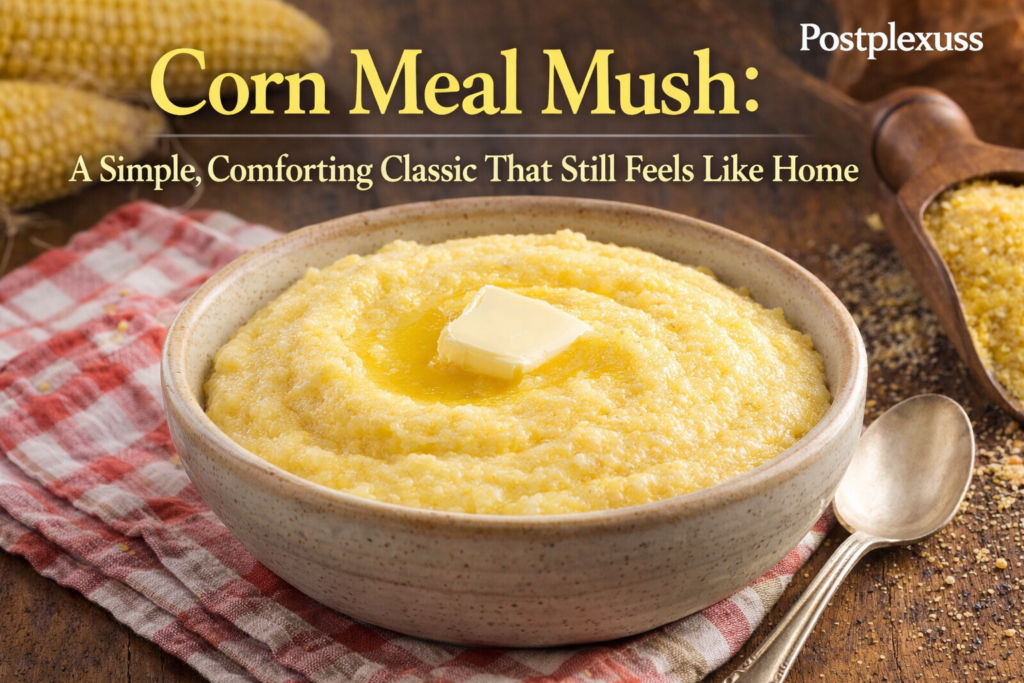

Some dishes don’t need reinvention. They survive because they work — because they comfort, fill, and remind people of slower mornings and well-worn kitchens. Corn meal mush is one of those dishes.
It isn’t flashy. It doesn’t rely on trendy ingredients or complicated techniques. Yet it has quietly remained a staple across generations. Whether served soft and warm or sliced and crisped in a skillet the next day, it carries a kind of humble charm that’s hard to replicate.
For many families, especially across the American South, this dish wasn’t just breakfast. It was tradition.
What Is Corn Meal Mush?
At its core, corn meal mush is a simple cooked mixture of cornmeal and water, gently simmered until thick and smooth. It’s sometimes referred to as traditional cornmeal porridge, especially in older cookbooks and rural kitchens.
Definition and Origin
Historically, corn-based dishes became essential in early American cooking because corn was affordable, accessible, and filling. From Native American cooking methods to early settler adaptations, cornmeal evolved into countless forms — breads, cakes, porridges, and of course, homemade cornmeal mush.
In its most basic form, the dish involves simmering cornmeal with water until it thickens into a soft, spoonable consistency. Once cooled, it firms up enough to slice, which opens the door to other preparations like fried cornmeal mush.
It was practical food. And practical food tends to last.
Difference Between Cornmeal Mush, Polenta, and Grits
People often confuse cornmeal mush with polenta or grits. They’re similar, but not identical.
Polenta, commonly associated with Italian cuisine, typically uses a coarser grind of corn and is often enriched with cheese or butter. Grits, on the other hand, are made from hominy — corn that has been treated with an alkali solution — giving it a distinct flavor and texture.
Southern cornmeal mush is simpler. It doesn’t rely on specialty processing. It uses standard ground cornmeal and leans toward a neutral flavor profile that can go sweet or savory depending on how it’s served.
The texture sits somewhere between porridge and pudding when soft, and becomes firm enough to slice once chilled.
Why It’s a Classic Southern Breakfast Dish
There’s a reason old fashioned cornmeal mush still shows up at breakfast tables.
It stretches ingredients. It feeds families. It pairs easily with whatever is on hand — syrup, milk, sausage, even a bit of butter and salt. In rural communities especially, it became a dependable morning meal long before boxed cereals took over grocery shelves.
And when leftovers were sliced and turned into pan fried cornmeal mush the next day? That was breakfast all over again.
Ingredients Needed for Corn Meal Mush
The beauty of this dish is its simplicity. Most kitchens already have everything required.
Basic Pantry Ingredients
The standard cornmeal mush ingredients include:
- Cornmeal
- Water
- A pinch of salt
That’s it. Nothing complicated.
Some cooks add a bit of butter for richness. Others stir in milk for a softer finish. But at its heart, creamy cornmeal mush doesn’t demand much.
Cornmeal-to-Water Ratio
Getting the cornmeal to water ratio right makes all the difference.
A common guideline is about 1 cup of cornmeal to 4 cups of water. This produces a thick but spoonable texture. If a softer consistency is preferred, slightly more water can be added. For firmer results — especially if planning to chill and slice — reducing the liquid just a touch can help.
The key is consistency. Too thin, and it never sets properly. Too thick too soon, and it can become lumpy.
Optional Add-Ins (Salt, Butter, Milk)
While traditionalists often stick to the basics, small additions can shift the flavor gently:
- A spoonful of butter for richness
- A splash of milk for smoother texture
- A bit more salt if serving savory
None of these are required. They simply give cooks flexibility depending on the mood of the meal.
How to Make Corn Meal Mush (Step-by-Step)
Cooking cornmeal mush on stovetop isn’t complicated, but it does require attention. It’s not the kind of dish to abandon while scrolling through a phone.
Step 1: Boil Water
Start by bringing the measured water to a steady boil in a medium saucepan. Adding the salt at this stage helps distribute flavor evenly.
The water needs to be actively simmering — not just warm — before the cornmeal goes in.
Step 2: Gradually Whisk in Cornmeal
This is where patience matters.
Cornmeal should be added slowly, whisking constantly. Pouring it in all at once almost guarantees lumps. A steady stream while stirring keeps the texture smooth.
For those wondering how to make cornmeal mush without frustration, this step is the answer. Slow and steady wins.
Step 3: Simmer Until Thick and Creamy
Once incorporated, reduce the heat to low. The mixture should simmer gently, not aggressively boil.
Stir frequently. As it thickens, it will start pulling slightly from the sides of the pan. After about 10–15 minutes, it transforms into creamy cornmeal mush with a soft, porridge-like texture.
Some prefer slow cooked cornmeal mush, allowing it to simmer longer over very low heat for deeper flavor and smoother consistency. That extra time can make a subtle difference.
Step 4: Serve Soft or Chill to Slice
At this point, it can be served immediately — warm and spoonable — topped with syrup, milk, or butter.
If planning for fried cornmeal mush later, pour the mixture into a lightly greased loaf pan. Smooth the top and let it cool completely. Once refrigerated for several hours, it firms up enough to cut into chilled cornmeal mush slices.
Those slices can then be transformed into something entirely new.
From Soft to Crispy: What Happens Next
While not part of the initial cooking steps, many people consider pan fried cornmeal mush the real reward.
Sliced pieces are lightly browned in a skillet until crisp on the outside and tender in the center. The contrast is what makes it satisfying — golden crust giving way to soft interior.
Some even experiment with baked cornmeal mush instead of frying, placing slices in the oven until lightly crisped. It’s less hands-on, though the skillet version tends to deliver a richer crust.
Either way, leftovers never feel repetitive.
A Dish That Doesn’t Try Too Hard
What makes corn meal mush endure isn’t just affordability or tradition. It’s flexibility.
It can lean sweet in the morning and savory by evening. It can be soft and comforting one day, crisp and hearty the next. It can feel rustic or refined depending on what sits beside it on the plate.
And perhaps that’s the quiet beauty of it.
No flashy ingredients. No culinary theatrics. Just cornmeal, water, and a bit of attention at the stove.
Sometimes, that’s more than enough.